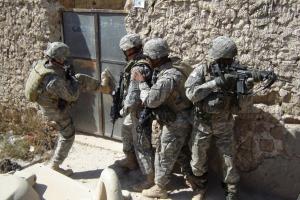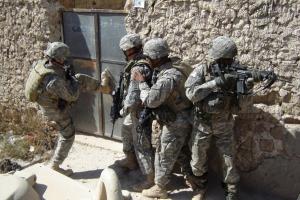


Every US military recruit is trained tofight and to kill and obligated to eight years of enlistment.
Ongoing conflicts today prove that deployment can happen at any time. You owe it to yourself to consider the many alternatives that do not restrict your life options. - Learn more
Parents
Enlisting in the military has been sold for generations as a way to grow up, get a start in life, maybe learn a skill and be part of a noble cause.
If you have kids today, recruiters will tell that familiar story. But today, less and less of it is true. - Learn more
Teachers and community
Based on years of experience in public schools, facilitating student organizations dealing with peace (i.e. peace clubs) in your area can have a transformative impact on student autonomy and school culture around pervasive militarism. Learn more
Who we are
TheNational Network Opposing the Militarization of Youth (NNOMY) is a network of organizations that organizes against the militarization of schools and young people in the United States.
NNOMY brings local, regional, and national peace and human rights groups together to connect youth to pathways towards meaningful lives, as alternatives to military enlistment.
"The U.S. military is deeply embedded in public schools, shaping children’s futures long before they’re old enough to understand the consequences — and parents were never meaningfully asked."
NNOMY was founded in the aftermath of the 2004 national counter-recruitment conference "Stopping War Where it Begins" in Philadelphia.[1] It is intended to be a decentralized and flexible structure that helps national, regional and local activists and organizations by promoting communication efforts and by stimulating collaboration between network members. NNOMY organizes actions and campaigns against militarism in order to raise awareness and to increase education on the topic.
25 de marzo de 2026 / Rose Horowitch / The Atlantic - Los acontecimientos de los últimos tres meses parecen haber sido orquestados a la perfección para provocar disturbios en los campus universitarios. En enero, las deportaciones masivas culminaron con el asesinato a sangre fría de ciudadanos estadounidenses a manos de agentes de inmigración enmascarados. En febrero, la Agencia de Protección Ambiental (EPA) anunció que dejaría de regular las emisiones de gases de efecto invernadero. Unas semanas después, la administración Trump se alió con Israel para lanzar un ataque contra Irán sin la aprobación del Congreso. Cabría esperar que los estudiantes universitarios de izquierda hubieran iniciado prácticamente una revolución.
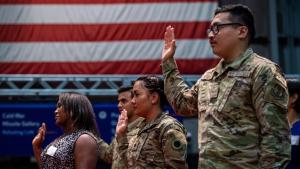
March 25, 2026 / Rose Horowitch / The Atlantic - The events of the past three months seem almost perfectly engineered to spark campus unrest. In January, mass-deportation operations led to the brazen killing of U.S. citizens at the hands of masked immigration agents. In February, the Environmental Protection Agency declared that it would no longer regulate greenhouse-gas emissions. A few weeks later, the Trump administration joined forces with Israel to launch an attack on Iran without congressional approval. One might expect left-leaning college students to have practically started a revolution.
March 16, 2026 / NNOMY Staff / National Network Opposing the Militarization of Youth - The Serve Act arrives at a moment when the U.S. military faces one of the most significant recruitment shortfalls in decades, and federal policymakers have responded not by rethinking the underlying causes of youth disinterest in military service, but by intensifying access to young people’s personal information and expanding the military’s presence in schools. The bill represents a strategic pivot: rather than relying on traditional recruitment pipelines, it seeks to normalize military contact with students as early as possible, to frame enlistment as a civic expectation, and to reduce the ability of families and communities to shield young people from aggressive recruitment tactics. For the counter‑recruitment movement, this legislation is not simply another policy challenge but a structural escalation that demands coordinated, long‑term resistance.
12 March 2026 / Edward Hasbrouck / Resisters.info - The organizations listed below oppose the recent change in federal law, buried in the 2026 National Defense Authorization Act, that will result in the Selective Service System (SSS) trying to “automatically” identify, locate, and register men ages 18 through 25 for a future draft. “Automatic” registration won’t produce an accurate or complete list of potential draftees. But it will increase the likelihood of war and violate the privacy of U.S. citizens and residents. Once implemented, an automatic registration system will deny young men, including conscientious objectors, the opportunity to indicate their opposition to being drafted by opting out of registration.
March 10, 2026 / NNOMY Steering Committee / The National Network Opposing the Militarization of Youth (NNOMY) - The National Network Opposing the Militarization of Youth (NNOMY) affirms its unequivocal opposition to the current war of the U.S. Trump Administration against the Republic of Iran. We hold that this conflict is illegal under international law and fails to meet the moral and ethical criteria established in just war theory, including just cause, legitimate authority, proportionality, and the exhaustion of non‑violent alternatives.
March 06, 2026 / NNOMY staff / The National Network Opposing the Militarization of Youth (NNOMY) - Across the United States, a largely invisible system has taken shape inside public schools—one that blends curriculum, culture, and institutional access to guide young people, especially boys, toward military enlistment. While framed as leadership development or career exploration, these programs function as early pipelines into military service, shaping students’ identities and opportunities long before they reach adulthood. At the center of this system is the Junior Reserve Officers’ Training Corps (JROTC), a century‑old program that has expanded dramatically in recent years and now reaches nearly half a million students nationwide. 1
March 2, 2026 / NNOMY staff / National Network Opposing the Militarization of Youth - Many young people think about joining the military because the benefits are real: steady pay, health coverage, college tuition, job training, and a sense of direction at a time when life can feel uncertain. These are powerful incentives, especially when school is expensive, jobs are unstable, and families are under financial pressure. Recruiters know this, and they speak directly to those needs. But there is a deeper question beneath the surface—one that every young person deserves the chance to consider honestly: What does it mean to accept personal benefits that may require participating in actions that cause harm to others? This is not a question about patriotism or politics. It is a question about moral agency, and about the kind of life you want to build for yourself.
A lo largo de Estados Unidos, la crisis de reclutamiento militar se desarrolla dentro de una historia mucho más antigua: la expansión del estado carcelario. A medida que las fuerzas armadas luchan por cubrir sus necesidades de personal, recurren cada vez más a poblaciones ya atrapadas en redes de vigilancia, castigo y criminalización. Para muchos jóvenes —especialmente jóvenes negros, latinos, indígenas, migrantes y pobres— la supuesta “elección” de enlistarse se ofrece en un paisaje donde las escuelas están militarizadas, los vecindarios están sobre‑policiados y la amenaza de la criminalización es constante. En ese contexto, el reclutamiento no es simplemente una oportunidad; es una forma de presión.
February 21, 2026 / NNOMY staff / National Network Opposing the Militarization of Youth - Across the United States, the military’s recruitment crisis is unfolding inside a much older story: the expansion of the carceral state. As the armed forces struggle to meet their personnel needs, they increasingly turn toward populations already entangled in policing, surveillance, and incarceration. For many young people—especially Black, Latino, Indigenous, migrant, and poor youth—the supposed “choice” to enlist is offered in a landscape where schools are militarized, neighborhoods are over‑policed, and the threat of criminalization is constant. In that context, recruitment is not simply an opportunity; it is a pressure point.
February 21, 2026 / NNOMY staff / National Network Opposing the Militarization of Youth - The question of whether U.S. intelligence agencies have investigated or monitored civilian counter‑military‑recruitment activism requires an examination that moves beyond simple yes‑or‑no answers and into the deeper historical and institutional structures that shape domestic intelligence practices. Counter‑recruitment activism occupies a distinctive position in American civic life. It challenges the policies, narratives, and institutional mechanisms that sustain military enlistment, and it often does so in spaces—public schools, community centers, and digital platforms—that intersect with federal interests in military readiness and national security. This proximity raises legitimate questions about whether such activism has ever drawn the attention of intelligence agencies.