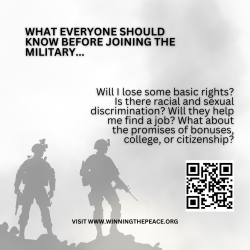
Every US military recruit is trained tofight and to kill and obligated to eight years of enlistment.
Ongoing conflicts today prove that deployment can happen at any time. You owe it to yourself to consider the many alternatives that do not restrict your life options. - Learn more
Parents
Enlisting in the military has been sold for generations as a way to grow up, get a start in life, maybe learn a skill and be part of a noble cause.
If you have kids today, recruiters will tell that familiar story. But today, less and less of it is true. - Learn more
Teachers and community
Based on years of experience in public schools, facilitating student organizations dealing with peace (i.e. peace clubs) in your area can have a transformative impact on student autonomy and school culture around pervasive militarism. Learn more
Who we are
TheNational Network Opposing the Militarization of Youth (NNOMY) is a network of organizations that organizes against the militarization of schools and young people in the United States.
NNOMY brings local, regional, and national peace and human rights groups together to connect youth to pathways towards meaningful lives, as alternatives to military enlistment.
"The U.S. military is deeply embedded in public schools, shaping children’s futures long before they’re old enough to understand the consequences — and parents were never meaningfully asked."
NNOMY was founded in the aftermath of the 2004 national counter-recruitment conference "Stopping War Where it Begins" in Philadelphia.[1] It is intended to be a decentralized and flexible structure that helps national, regional and local activists and organizations by promoting communication efforts and by stimulating collaboration between network members. NNOMY organizes actions and campaigns against militarism in order to raise awareness and to increase education on the topic.
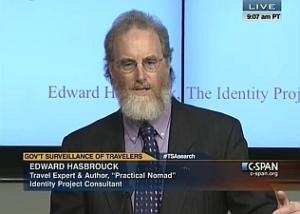
December 9, 2025 / Edward Hasbrouck / Edward Hasbrouck's Blog - An amendment to the Military Selective Service Act to direct the Selective Service System (SSS) to try to register all potential draftees in the USA automatically has been included in the version of this year’s military authorization bill agreed to by a House-Senate conference committee and likely to be enacted into law within the next few weeks. This doesn’t mean that a draft is being activated right away, or that any or all of those “automatically” registered will be sent induction orders — although preparing to do so is the sole purpose of registration with or by the SSS. This will, however, be the largest change in Selective Service law since 1980. More importantly, it will move the USA closer to activation of a draft, or at least to being able to claim to be ready to activate a draft “on demand” of Congress and the President, than at any time in the half century since draft registration was suspended and draft boards were deactivated in 1975.
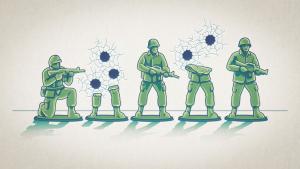
November 24, 2025 / NNOMY - Counter-recruitment activism has diminished primarily due to a decline in public and progressive support, which has led to reduced funding and participation. The movement has historically ebbed and flowed in response to active wartime periods, and the current era of "perpetual war-fighting" has desensitized the public to aggressive military recruitment tactics, weakening the urgency for counter-recruitment efforts. Despite the U.S. being engaged in two controversial wars for 15 years, support for counter-recruitment has waned, even among progressive circles. This decline is exacerbated by the fact that many military recruitment promises have become more credible over time, reducing the perceived need for intervention. As a result, full-time counter-recruitment work is now largely conducted on a volunteer basis, with organizations struggling to maintain operations and secure resources.
Steve Mason fue un veterano condecorado de la guerra de Vietnam cuyo poema “El muro interior” se convirtió en una poderosa voz de sanación en la inauguración del monumento a los veteranos de Vietnam en 1984. Steve Mason, nacido en Brooklyn en 1940, sirvió como capitán del Ejército de Estados Unidos durante la guerra de Vietnam. Tras regresar a casa, se convirtió en poeta y defensor de la paz, canalizando el trauma y la complejidad de la guerra en versos que resonaron profundamente entre los veteranos y sus familias. Lo conocí en 1976 en las reuniones del Teatro de Poetas de India Street, en lo que entonces se llamaba la Colonia de Artistas de India Street, en Five Points , San Diego. Quienes asistían a las lecturas lo conocían como Vito, y sus contribuciones a esas veladas destacaban por su fortaleza de carácter y los demonios que lo atormentaban, los cuales resonaban en su poesía. Solo sabía que había sido soldado de las fuerzas especiales en Vietnam. Se convirtió en un asistente habitual y amigo de los poetas David y Paula Banks, quienes organizaban las lecturas en su casa de la colonia, ubicada en la esquina de las calles India y Washington, con vistas a Five Points . En 1980, tras la muerte de David por cáncer de pulmón, apareció y leyó un poema en su honor durante la inauguración de la Galería de Instalaciones en el número 417 de la Quinta Avenida, en el barrio marginal del centro de San Diego. El barrio marginal pronto se convertiría en el distrito Gaslamp. Esa fue la última vez que lo vi. En aquel entonces, no sabía quién era más allá de su voz como poeta, y veinticinco años después descubrí que era el poeta laureado del Muro de los Veteranos de Vietnam en Washington, D.C.
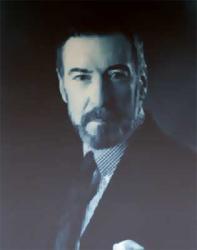
Steve Mason was a decorated Vietnam War veteran whose poem “The Wall Within” became a powerful voice of healing at the Vietnam Veterans Memorial dedication in 1984. Steve Mason, born in Brooklyn in 1940, served as a U.S. Army captain during the Vietnam War. After returning home, he became a poet and advocate for peace, channeling the trauma and complexity of war into verse that resonated deeply with veterans and their families. I met him in 1976 at the India Street Poets Theater gatherings at what was called the India Street Artist's Colony at Five Points in San Diego. Those at the readings knew him as Vito and his contributions to those evenings stood out from his strength of character and the demons that were residing in him that echoed through his poetry. I only knew that he had been a special forces soldier in Vietnam. He became a regular and a friend to poets David and Paula Banks that hosted the readings in their home in the colony perched over the Five Points on India and Washington streets. By 1980, with the death of David from lung cancer, he showed up and read a poem for David at the inauguration of the Installation Gallery at 417 Fifth Avenue on skid-row in Downtown San Diego. Skid-row was soon to become the Gaslamp district. That was the last time I saw him. At that time I did not know who he was beyond his voice as a poet and twenty-five years later I found out he was the poet laureate of the Vietnam Wall in Washington, DC.
September 2001 / John Grueschow / Youth & Militarism Magazine - Since August 1995, Portland (OR) Public Schools District has maintained a controversial policy prohibiting military recruitment on school district property. Portland’s ban on military recruiting is based on the Armed Forces’ discrimination against lesbians and gays, as exemplified particularly in the "Don’t Ask, Don’t Tell, Don’t Pursue" policy.
Last spring, two school board members initiated intense public debate by announcing their intention to overturn the six-year-old recruiting ban. Activists, students, and parents on both sides of the issue lobbied board members, gave many hours of public testimony, and staged public protests.