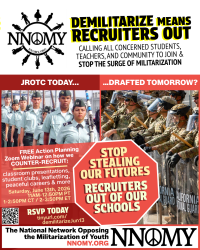

Every US military recruit is trained tofight and to kill and obligated to eight years of enlistment.
Ongoing conflicts today prove that deployment can happen at any time. You owe it to yourself to consider the many alternatives that do not restrict your life options. - Learn more
Parents
Enlisting in the military has been sold for generations as a way to grow up, get a start in life, maybe learn a skill and be part of a noble cause.
If you have kids today, recruiters will tell that familiar story. But today, less and less of it is true. - Learn more
Teachers and community
Based on years of experience in public schools, facilitating student organizations dealing with peace (i.e. peace clubs) in your area can have a transformative impact on student autonomy and school culture around pervasive militarism. Learn more
Who we are
TheNational Network Opposing the Militarization of Youth (NNOMY) is a network of organizations that organizes against the militarization of schools and young people in the United States.
NNOMY brings local, regional, and national peace and human rights groups together to connect youth to pathways towards meaningful lives, as alternatives to military enlistment.
"The U.S. military is deeply embedded in public schools, shaping children’s futures long before they’re old enough to understand the consequences — and parents were never meaningfully asked."
NNOMY was founded in the aftermath of the 2004 national counter-recruitment conference "Stopping War Where it Begins" in Philadelphia.[1] It is intended to be a decentralized and flexible structure that helps national, regional and local activists and organizations by promoting communication efforts and by stimulating collaboration between network members. NNOMY organizes actions and campaigns against militarism in order to raise awareness and to increase education on the topic.
The war on terror was not inevitable, nor was the extraordinary violence carried out in its name necessary.
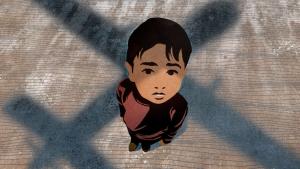
In a 2013 Congressional hearing on drone warfare, a young Pakistani boy named Zubair Rehman, aged 13 at the time, talked about the feeling of living under the threat of constant drone strikes. In his powerful testimony, Zubair stated that “I no longer love blue skies. In fact, I now prefer gray skies…The drones do not fly when the skies are gray…When the sky brightens, drones return and we live in fear.”
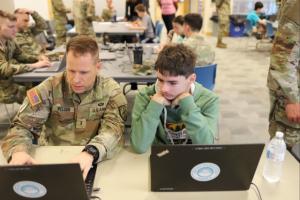
Militarization today rarely announces itself in the ways previous generations learned to recognize. It no longer arrives through the familiar figure of a recruiter stationed behind a cafeteria table, waiting to make a pitch. Instead, it slips quietly into the digital spaces young people inhabit every day. It appears in the curated ads that follow them across platforms, in STEM programs whose funding sources remain carefully obscured, in video games designed to normalize the reflexes of remote warfare, and in job postings that promise purpose and stability without ever acknowledging the machinery of violence they ultimately support. Young people now live inside a technological environment where militarization is ambient, automated, and largely invisible, and counter‑recruitment must adapt to this new terrain if it hopes to remain relevant.
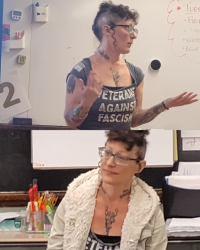
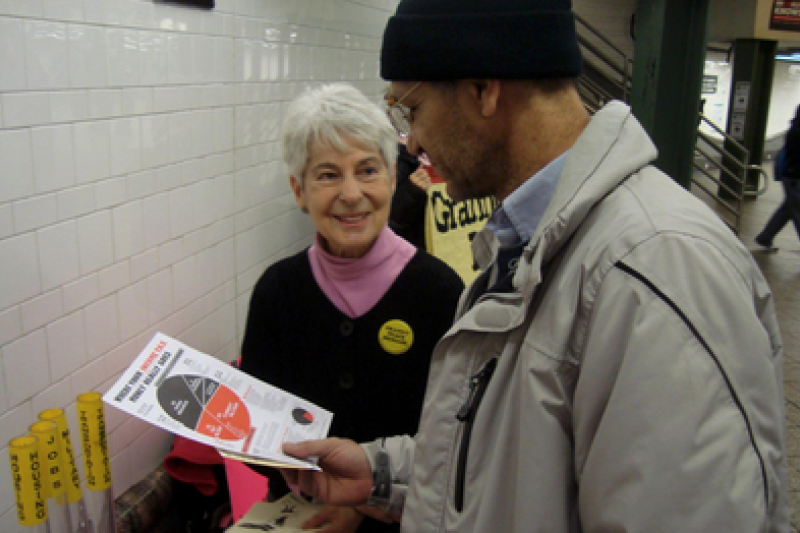
Counter‑recruitment has always been a practice rooted in community care: volunteers tabling in high schools, veterans speaking honestly about the realities of military life, organizers challenging ASVAB testing, and advocates offering young people meaningful alternatives to enlistment. The NNOMY network’s long‑standing work reflects this tradition. In Bellingham, for example, the Whatcom Peace & Justice Center has spent decades providing students with non‑military options through equal‑access tabling agreements that allow volunteers to meet youth face‑to‑face in their schools .
June 8, 2026 / Henry A. Giroux / Truthout - What happens to higher education when institutions dedicated to critical thought increasingly align themselves with the logics of war, surveillance, and national security? Unless we mount an organized resistance, we may viscerally experience the answer to this question all too soon.
May 03, 2026 / Joy Damiani / We Are Not Your Soldiers -“How do veterans become homeless?” is a question that should not have to be asked in a healthy society. When addressed to me by a teenager in a school in the heart of Manhattan, it spoke volumes of the world students are about to inherit. Not only are they witnessing and experiencing horrors in every direction, but they’ve got frighteningly little information about what the future is going to hold for them, and even less about the military.
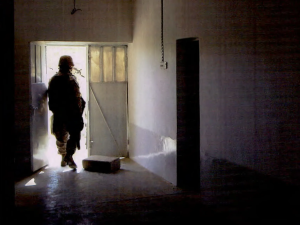
August 27, 2024 / Madeleine Baran / The New Yorker - On the morning of November 19, 2005, a squad of Marines was traveling in four Humvees down a road in the town of Haditha, Iraq, when their convoy hit an I.E.D. The blast killed one Marine, Lance Corporal Miguel Terrazas, and injured two others. What followed would spark one of the largest war-crime investigations in the history of the United States.
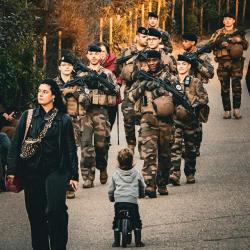
May 25, 2026 / Gary Ghirardi / Peace Educators Allied for Children Everywhere (P.E.A.C.E.) - In early‑childhood education, we often talk about the environments that shape a child's sense of safety, belonging, and possibility. We know that children learn not only from what adults teach them, but from the stories, symbols, and expectations that surround them.
En 2024, el gasto militar mundial alcanzó la asombrosa cifra de 2,7 billones de dólares, la más alta de la historia. Solo Estados Unidos representó casi la mitad de ese total. Mientras las familias luchan por pagar el alquiler y las escuelas se desmoronan por la falta de inversión, el presupuesto militar sigue aumentando sin un debate público significativo. Estas no son fuerzas naturales. Son decisiones políticas.
Apr 28, 2026 / Move the Money Campaign / Women's International League for Peace & Freedom WILPF / NNOMY - We live in a country where young people are told there is “no money” for affordable housing, no money for mental‑health services, no money for climate resilience, no money for education, and no money for the basic social supports that allow communities to thrive. Yet somehow, year after year, there is always money for war.
Red Nacional que se opone a la militarización de la juventud: Son tiempos difíciles. Las agencias del DHS y las fuerzas armadas están invadiendo nuestras comunidades. Nuestras fuerzas armadas están librando una guerra o amenazando con la guerra en múltiples frentes.
Mientras tanto, para mantener una presencia tan activa en el escenario mundial, las fuerzas armadas necesitan más reclutas. Los reclutadores aparecen en nuestras escuelas, reuniones comunitarias, redes sociales, en nuestros teléfonos, en todas partes, al parecer.