
Articles

Featured

The relationship between childhood poverty, military service, and later life depression among men: Evidence from the Health and Retirement Study

Men raised in poverty had greater odds of draft and all-volunteer military service. Early-life experiences, independent of military service, appear associated with greater odds of Major Depression. Assessing childhood poverty in service members may identify risk for depression in later life.

   español  -

Natalie Bareis / Briana Mezuk  / Journal of Affective Disorders / NIH  - Major Depression (MD) is the most common psychiatric disorder among middle-age and older adults, affecting between 15% and 20% of this population (Aldrich, 2016Diefenbach and Goethe, 2006). MD is associated with premature mortality from lack of self-care, diminished functioning, and suicide (Fiske et al., 2009). There is a growing body of research that indicates mental health in middle age and later-life is influenced by exposures experienced much earlier in the life course, including in childhood. For example, adverse childhood experiences (ACEs), such as experiencing neglect and abuse, are associated with MD in adults across the lifespan (Culpin et al., 2015). Even less severe exposures such the experience of poverty early in life have been associated with depression in older adults (Johnson et al., 1999).

Childhood poverty is also associated with entrance into military service. Prior research indicates that individuals who experienced poverty and other ACEs in childhood are more likely to enroll in military service (at least in the all-volunteer era (Segal et al., 1998)), with Blosnich et al. (2014) hypothesizing “that the military may serve as a route for a subset of persons to escape dysfunctional home environments, at least among men.” (p. E4). It is also notable that the racial make-up of the military has changed substantially over time, becoming more racially-diverse in recent decades (2014 Demographics: Profile of the Military Community, 2014Barnes et al., 2013). Thus, military service may provide a pathway out of poverty, ultimately altering individuals’ mental and physical health trajectories (Chatterjee et al., 2009).

However, military service also puts individuals at risk of exposure to combat and other types of trauma, exposures that have established negative relationships with MD and other forms of psychopathology in later life (Cabrera et al., 2007Conner et al., 2014Hoge et al., 2004). For example, studies of identical twins who both served in the military during the Vietnam War have shown combat exposure is associated with later risk of post-traumatic stress disorder many years after service ends (Goldberg et al., 1990Koenen et al., 2002). In sum, the long term implications of childhood poverty and military service on MD is poorly understood. Extant studies have been limited in scope (i.e., use of non-representative samples; have not examined specific elements of military service history; have relied on non-specific measures of psychological distress) (Blosnich et al., 2014Montgomery et al., 2013).

The goal of this study is to examine the relationships between childhood poverty and military service with MD in a nationally-representative sample of older men using data from the Health and Retirement Study. The objectives of this analysis are to: 1) Examine the relationship between childhood poverty and MD; 2) Examine the relationship between military service and MD; and 3) Assess whether the relationship between childhood poverty and MD is mediated or moderated by history of military service among men. We hypothesized that the relationship between childhood poverty and MD would be partially mediated by history of military service. If that is the case then the relationship between childhood poverty and MD will be reduced, but still significant after controlling for history of military service.

Featured

The Entertainment Propaganda Machine

  español  -

 April 05, 2024 / Tarik Ata / The International - Propaganda is something we in the West often associate with Nazi Germany and the likes of Joseph Goebbels or even that of the Soviet Union — often incorrectly equating the USSR to the Nazi regime in the process. But what if I were to tell you we currently live in a far more propagandised world, one that even the notorious propagandist Goebbels would not have been able to fathom. Well, this is the predicament we find ourselves in.

Propaganda is disseminated via a myriad of mediums, be it entertainment (cinema, TV, video games, and even music) to academia, journalism, and various other information-producing industries. The United States government has, and continues to, propagate an image of itself as a benevolent power seeking the promotion of “liberal” virtues around the globe. Despite furthering its own interests by breaking international law and committing crimes against humanity, as we saw in Abu Ghraib, the notorious prison in Iraq where many were tortured and sexually abused, and in Guantanamo Bay, where hundreds were detained — many still are — without trial and held against their will often suffering barbaric abuses such as sodomy and torture.

The propaganda machine of the United States has infiltrated every aspect of our lives, dictating the narrative empire wants to be told and masking the crimes that are committed. The barbarity that Washington engages in serves the capital and political interests and is often at the expense of those within the metropole as taxpayers fund Washington’s imperial ambitions. All the while the United States is crumbling from within, with tens of millions currently living in poverty, life expectancy is falling, and infrastructure collapsing; the empire, as Parenti notes, bleeds the republic.

One area that is insidious, because of the often-alleged apolitical approach of this industry, from Hollywood, and the entertainment industry more broadly, as it partakes in spreading an imperial doctrine around the globe propagating it to the masses. The image that is developed and the message which is distributed, as we shall outline, is dictated by American exceptionalism and hegemonic interests using entertainment as a tool in empire building.

Featured

Replay: The militarization of youth and how to counter it

(The following article is a reposting from eleven years ago from the office of the War Resisters' International at the Peace Pentagon in London - Seems appropriate to raise the bar for counter-recruitment in the time of Trump.)

  español -

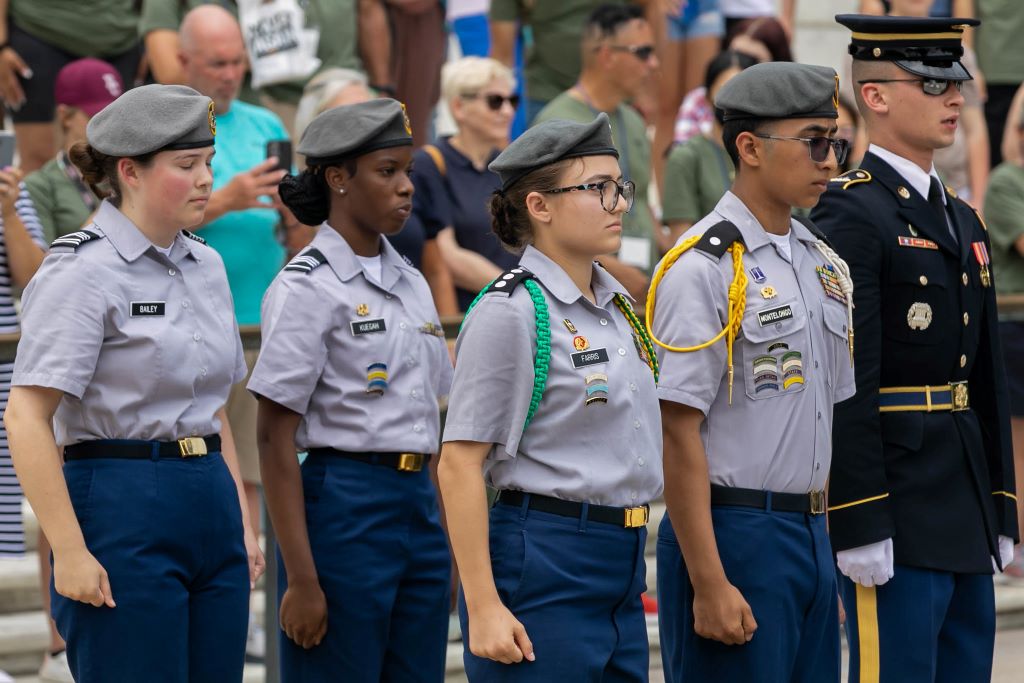
17 Jun 2014 / Sahar Vardi and Dola Nicholas Oluoch / War Resisters' International The images of war, armed conflict and organized violence worldwide can take different forms, but the one thing they almost always have in common are the young men and women filling the lines of military and paramilitary organizations.

In both countries that still have conscription, and countries with professional militaries, governments, education systems, the militaries themselves and even privet companies and organizations, are all actively promote militaristic values, both to fill the ranks of armed forces, and to legitimize the use of organized violence socially.

In conscript societies, even though conscription is enforced by law, there are still great efforts to militarize youth. In Israel for example, much of the effort is concentrated in schools. Soldiers going in and out of classrooms explaining about units and positions, teachers being measured according to the enlistment rate of their students, principals promoting their schools by showing-off the high rate of combat soldiers or officers that graduated from the schools, and ministers of education that out-right declare that preparation for military service is one of the goals of the education system. According to a survey done by WRI in 32 countries (both with conscript and professional militaries), in 18 of them there’s an official collaboration between the ministry of education and the military, and in the majority of countries with no mandatory service, the military does overt recruitment in schools. But militarization of youth doesn’t start and end within the walls of education systems.

While more and more countries in the world abolish conscription and move to a professional army there are plenty of other, more and less official ways to militarize youth without laws forcing conscription.

NNOMY is Funded by

© 2026 NNOMYpeace. Designed By JoomShaper


Gonate time or money to demilitarize our public schools

FAIR USE NOTICE

FAIR USE NOTICE

This site contains copyrighted material the use of which has not always been specifically authorized by the copyright owner. We are making such material available in our efforts to advance understanding of issues connected with militarism and resistance. We believe this constitutes a ‘fair use’ of any such copyrighted material as provided for in section 107 of the US Copyright Law. In accordance with Title 17 U.S.C. Section 107, the material on this site is distributed without profit to those who have expressed a prior interest in receiving the included information for research and educational purposes. For more information go to: https://www.law.cornell.edu/uscode/17/107.shtml. If you wish to use copyrighted material from this site for purposes of your own that go beyond ‘fair use’, you must obtain permission from the copyright owner.

Contact NNOMY

NNOMY

The National Network Opposing

the Militarization of youth
San Diego Peace Campus

3850 Westgate Place
San Diego, California 92105 U.S.A.
admin@nnomy.org  +1 619 798-8335
Tuesdays & Thursdays 12 Noon till 5pm PST
NNOMY Volunteer and Internship Inquiries